
GEOMET Coating Explained: Full Corrosion-Engineering Deep Dive
How zinc-aluminum flake GEOMET protects entire rotors through heat cycles — and why paint and plain zinc fail on performance and truck kits.
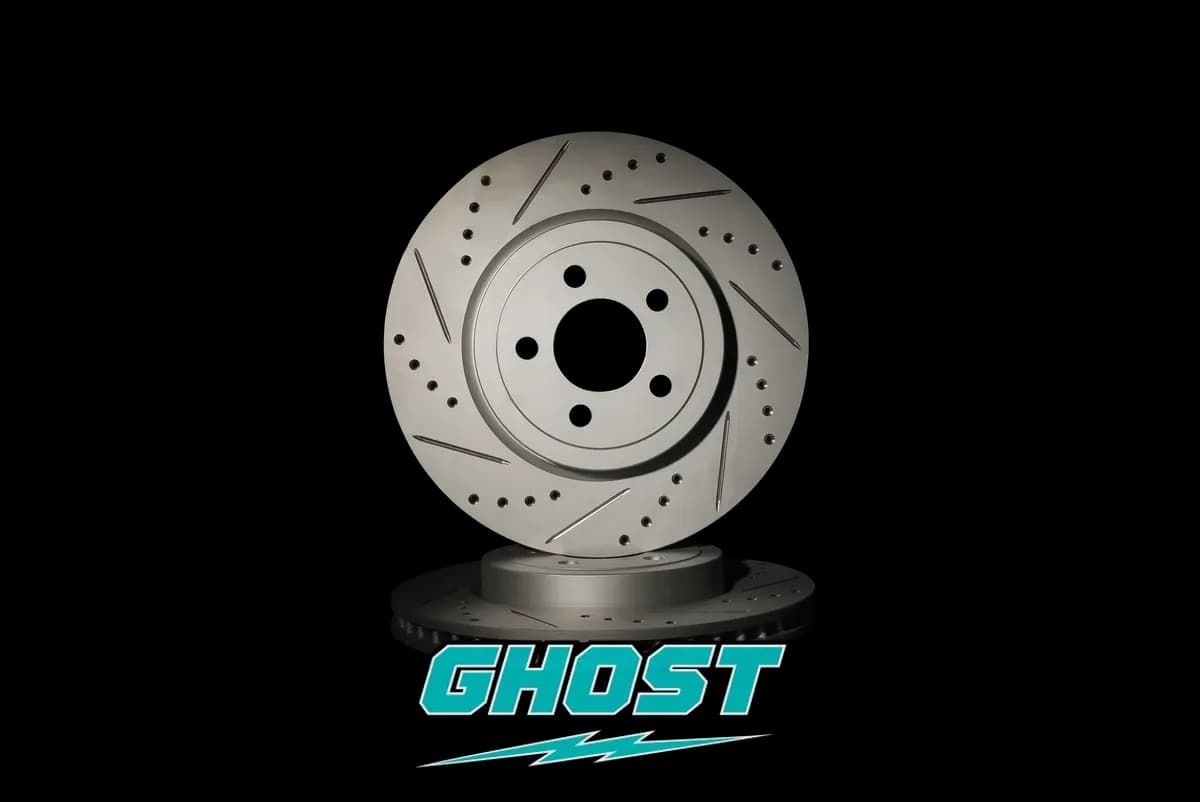
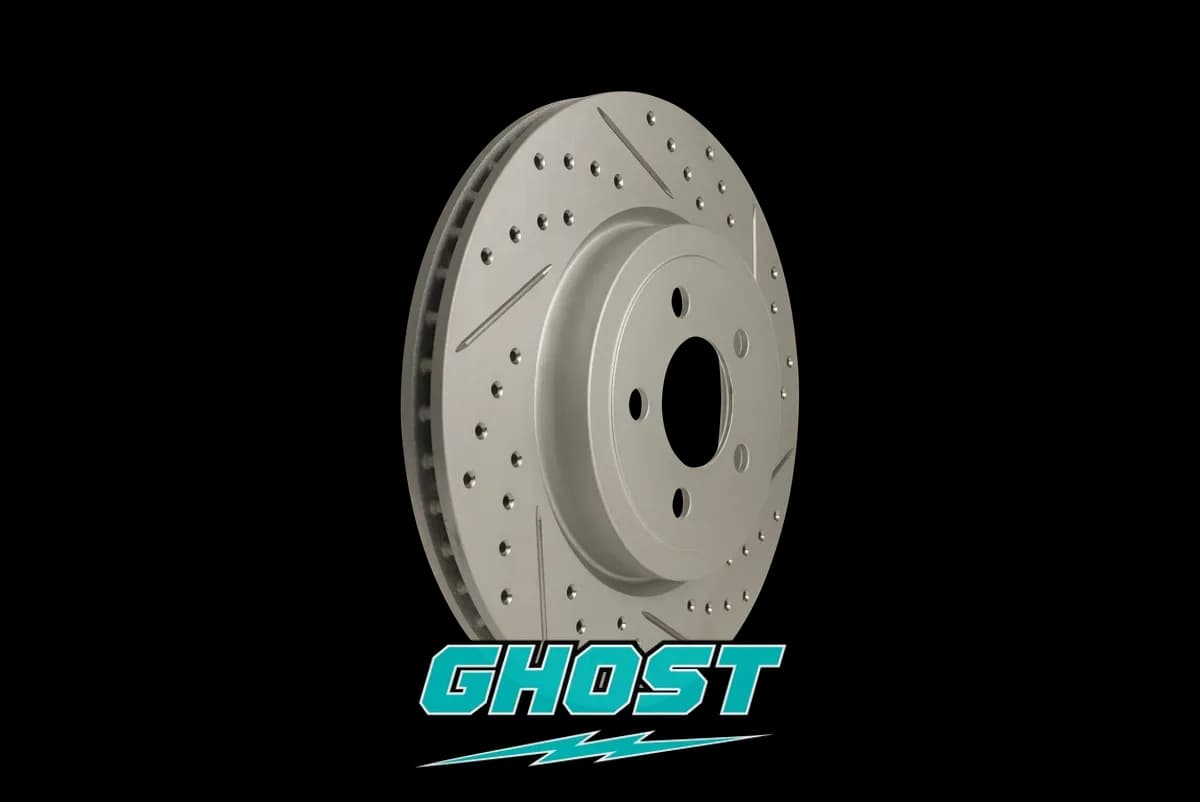
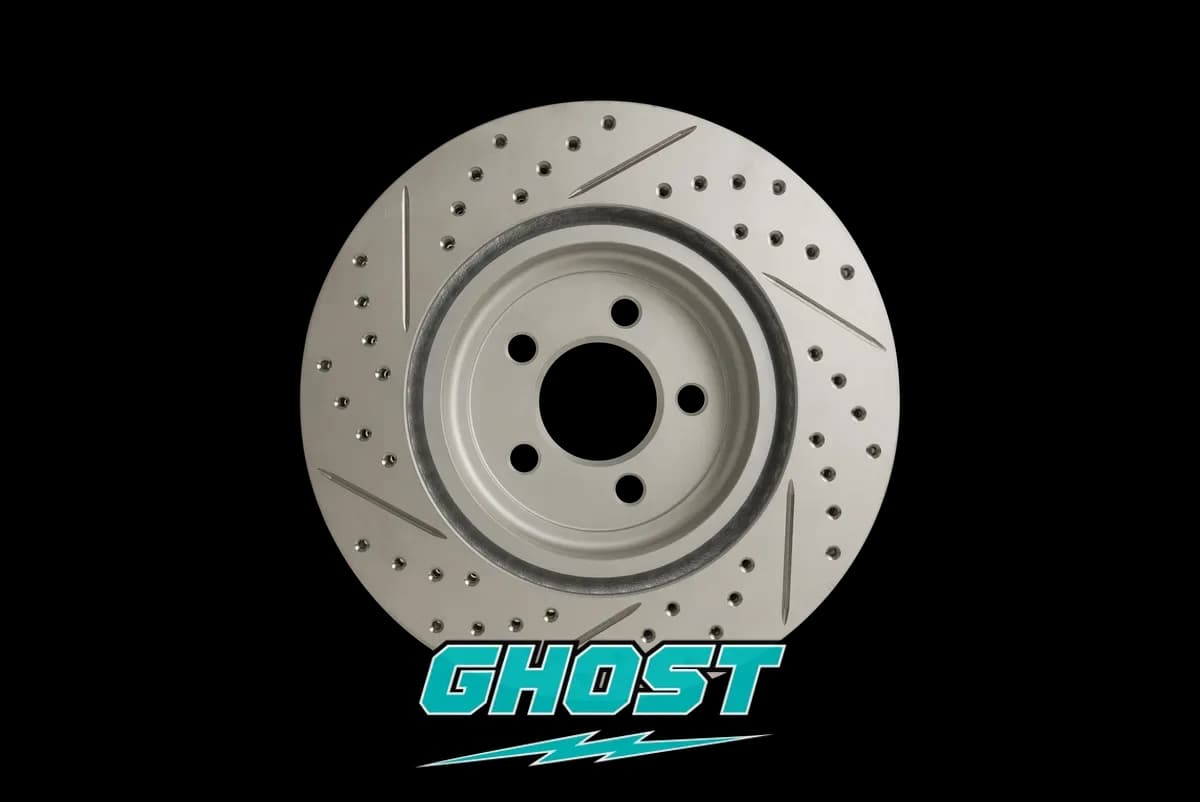
GEOMET is a thin-film zinc-aluminum coating applied to the full rotor — friction ring edges, internal vanes, hat surfaces, and mounting features. Ghost Brakes uses GEOMET on every G11H18 drilled-and-slotted rotor and on 2-piece hat and ring assemblies because brake rotors live in the harshest environment on the vehicle: heat, salt, abrasive dust, and repeated pressure washing.
Paint-based rotor finishes look good in product photos but chip at pad sweep within the first heat cycles, exposing bare iron that rusts unevenly and creates thickness variation felt as pedal pulsation. Plain electroplated zinc scrubs away at the same interfaces. GEOMET’s flake structure sacrifices itself slowly while maintaining a barrier across vanes that must stay open for cooling.
Application Process and Bonding
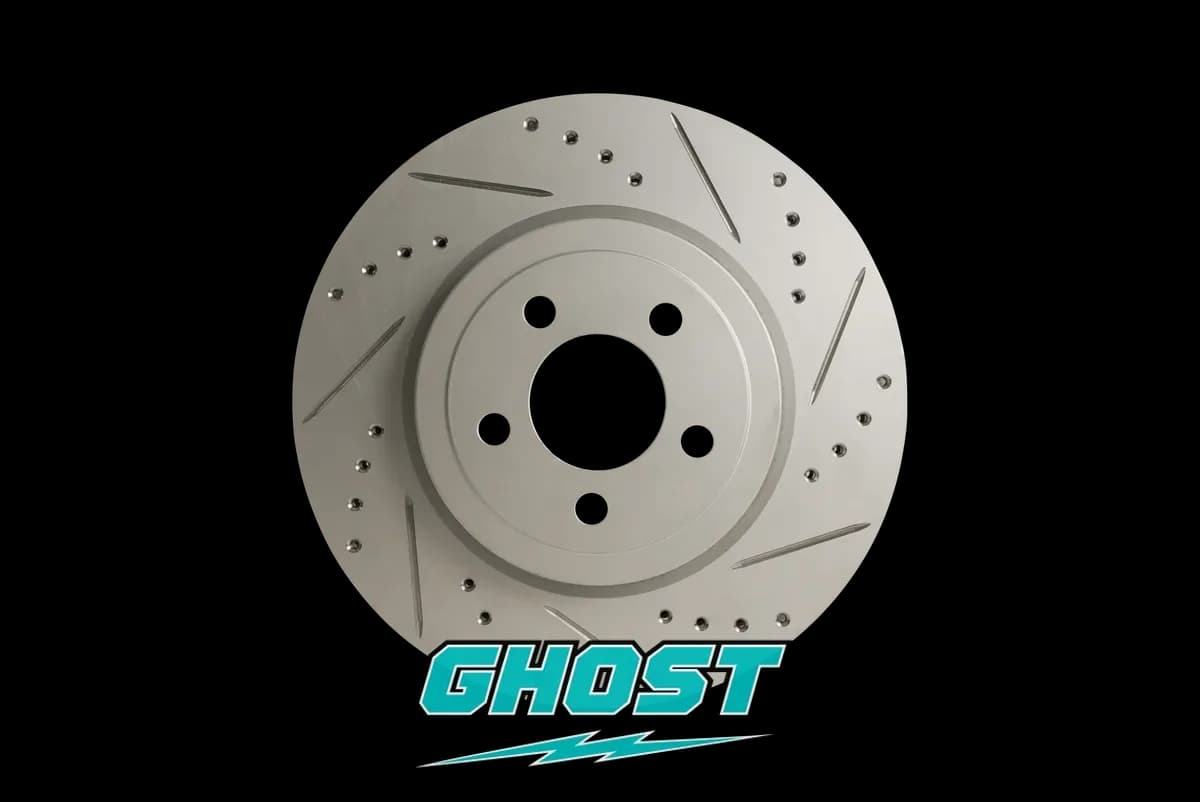
GEOMET is applied as a water-based dip-spin or spray process, then cured to bond flakes in overlapping layers. The result is a uniform coating thickness measured in microns — enough to protect without altering rotor balance or critical dimensions. Because the coating covers internal passages, airflow through vanes remains predictable over years of service, not just the first winter.
On 2-piece rotors, GEOMET protects the aluminum hat’s mating surfaces and hardware pockets where galvanic corrosion would otherwise start between dissimilar metals. On one-piece truck rotors, it keeps drill chamfers and slot mouths from rusting into stress risers that promote cracking under towing thermal loads.
Heat Cycling and Friction Face Behavior
The pad sweep area will always polish the coating where friction occurs — that is normal. Engineering value is at the edges, under the pad overhang, and throughout internal geometry where OEM rotors rust first. When those areas swell with corrosion, effective rotor thickness and cooling capacity change, accelerating wear and warp tendency.
GEOMET survives thousands of heat cycles within its design temperature band. Pairing GEOMET with G11H18 or G3500 metallurgy chosen for the platform completes the corrosion story: the alloy resists thermal distortion while the coating resists environmental attack between events.
Comparison to OEM and Economy Aftermarket
- OEM — often bare iron or minimal coating; adequate for fleet-average duty, weak in salt-belt winters
- Economy aftermarket — painted faces that chip; rust streaking within months
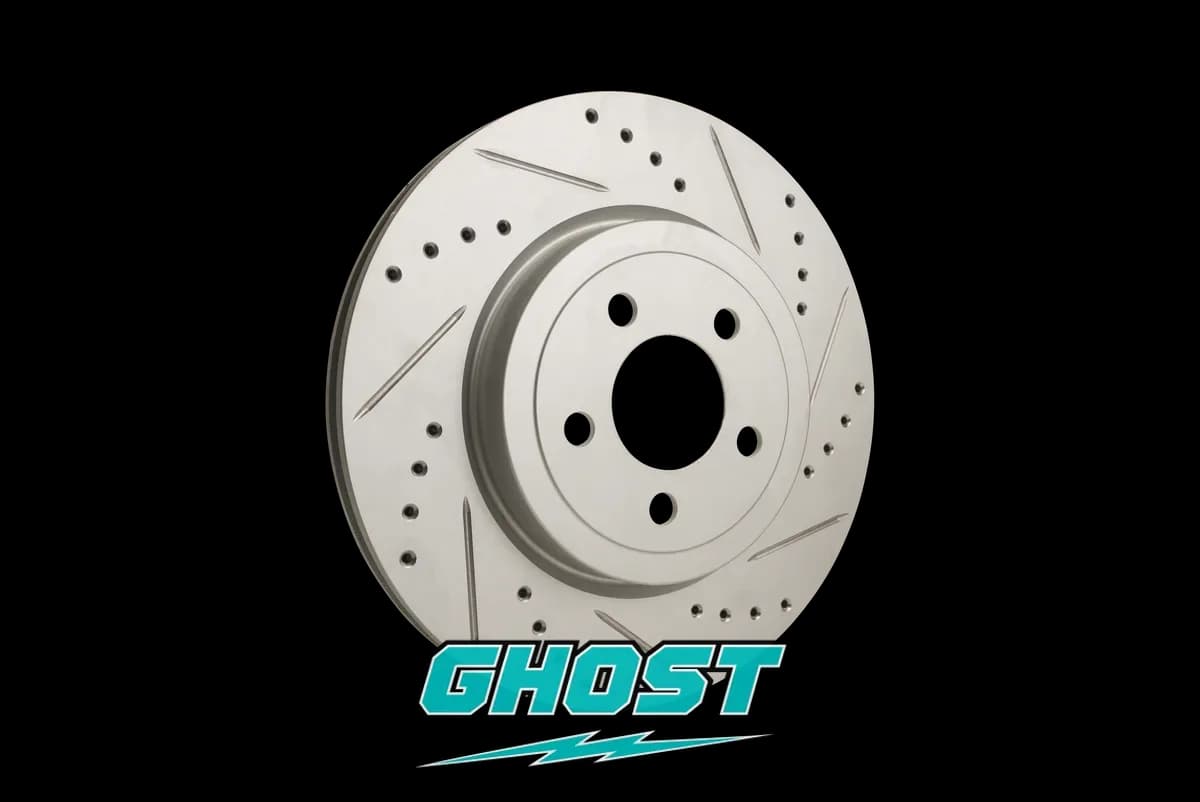
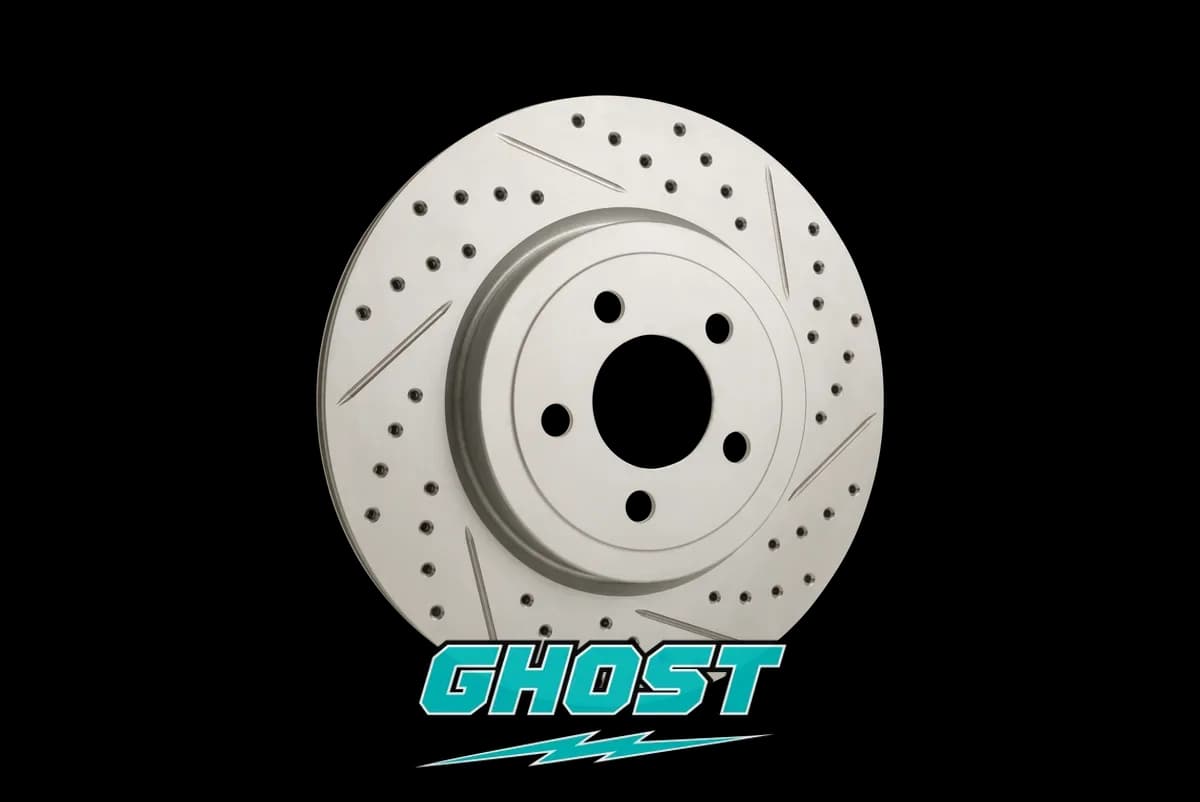
- GEOMET D&S — full-rotor protection with open vane cooling on Ghost Brakes 555 kits
- 2-piece floating — GEOMET on ring and hat for muscle and Euro platforms
If you tow, off-road, or daily-drive in snow states, coating is not cosmetic — it is part of rotor longevity and pedal consistency.
Maintenance and Inspection
GEOMET does not eliminate bedding or pad transfer layers. Follow Ghost Brakes bedding procedures after install. During tire rotations, inspect vanes for debris packing — coating makes cleaning easier because rust is not binding mud in the passages. Replace rotors when thickness is below spec or when lateral runout exceeds service limits, not when cosmetic rust appears on unused areas of economy rotors.
Where to Buy Ghost Brakes Kits
Technology pages explain why Ghost Brakes hardware is built the way it is; Slyde Over handles cart checkout, shipping tracking, and warranty registration. Click Where to Buy from any vehicle or technology page to open the retailer with UTM attribution — same rotors, same pads, same warranty.
When you have chosen a tier, confirm rotor diameter and pad shape against your factory caliper spec. American split kits (2-piece front, G11H18 rear) balance cost and capability on Hellcat, Camaro, and Charger platforms; full 2-piece Euro kits maximize thermal headroom on track-focused builds.
Still researching? Read vehicle-specific blog guides, then use the year/make/model finder to narrow SKUs before you add a kit to cart.
Document your rotor diameters and pad shapes when comparing tiers so support can confirm compatibility in one email.
Related Ghost Brakes Technology
Deep dives on 2-piece rotor technology, carbon ceramic pads, and GEOMET coating explain metallurgy and coating choices. Link to those pages when you want engineering context; return to vehicle hubs or Slyde Over when you need live SKU, price, and checkout.
Compare floating rotors vs one-piece G11H18 kits in our blog, then filter the Slyde Over catalog by make and model. Free continental US shipping applies to qualifying complete kits through our authorized retailer.
Winter storage, salted roads, and repeated short trips are hard on untreated iron rotors — GEOMET and proper pad selection address corrosion and dust without sacrificing bite for street and light track use.
If you are comparing against OEM or big-box brands, read our competitor comparison posts on Slyde Over, then return here for metallurgy context before you choose a tier.
Find Brakes for Your Vehicle
Use the vehicle search to open your year/make/model hub, compare 555 and 777 tiers, and follow Where to Buy when you are ready to checkout on Slyde Over. Spec sheets list rotor diameter, pad compound family, and whether the kit uses 2-piece fronts, full floating corners, or GEOMET-coated one-piece rotors.
Off-road, tow, and track builds should confirm caliper clearance with your wheel spec — especially on TRX, Raptor, and HD trucks where optional wheel packages change clearance. When in doubt, contact us before you order.
Corrosion starts at drill edges and vane mouths long before the friction face looks worn — coating chemistry matters as much as metallurgy.